Leavers and Permanently Allocated Gauges: Close the Gap
He left in June. His micrometer is due in November and still in his name. How to offboard calibrated gauges before an auditor finds the gap.
He Left in June. His Micrometer Is Due in November.
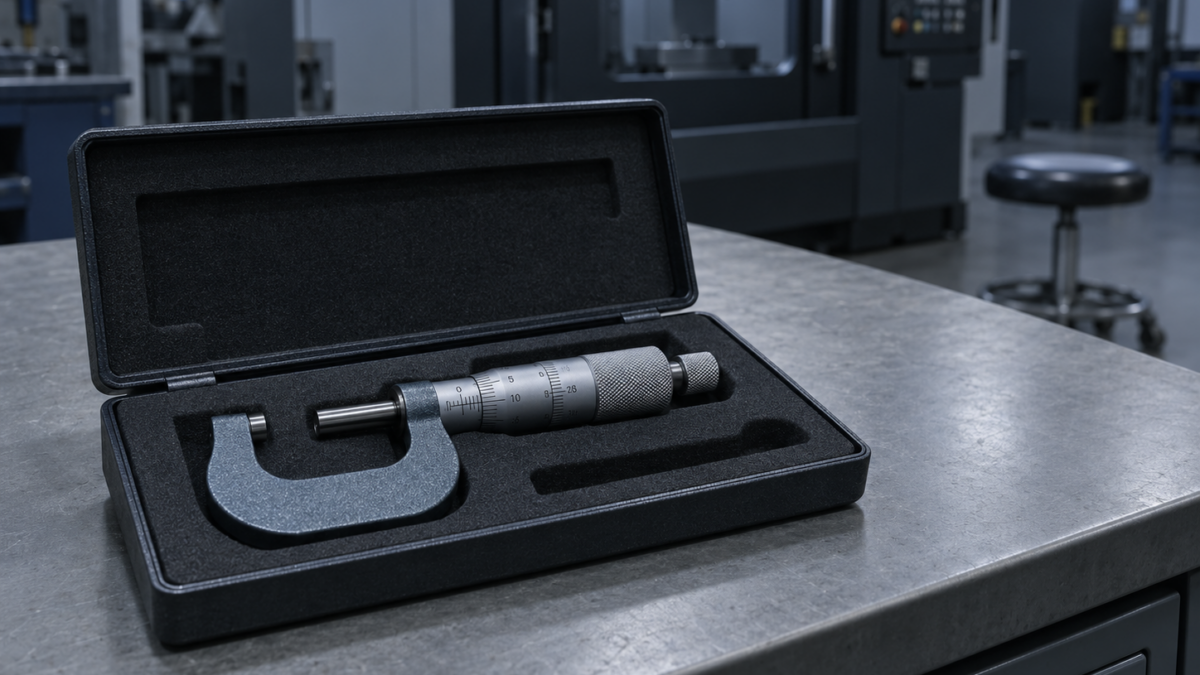
Marta runs the gauge register for a machining site that supplies brake components. In late September she filters the register by upcoming due dates and finds a 0–25 mm outside micrometer, due on 14 November, permanently allocated to a setter called Daniel. Daniel left the company on 30 June. His laptop, badge and locker key were returned on his last day and signed off by HR. The micrometer was not on that checklist. Nobody asked.
The register is not technically wrong. The instrument is in calibration, the certificate is valid, the due date is correct. What the register cannot tell her is where the micrometer has been for the last three months, or who has been measuring parts with it.
That is the gap this article is about. It is not a missing instrument, not yet. It is a custody record that stopped being true on the day a person left, while the calibration status carried on looking fine.
Why permanent allocation is the blind spot
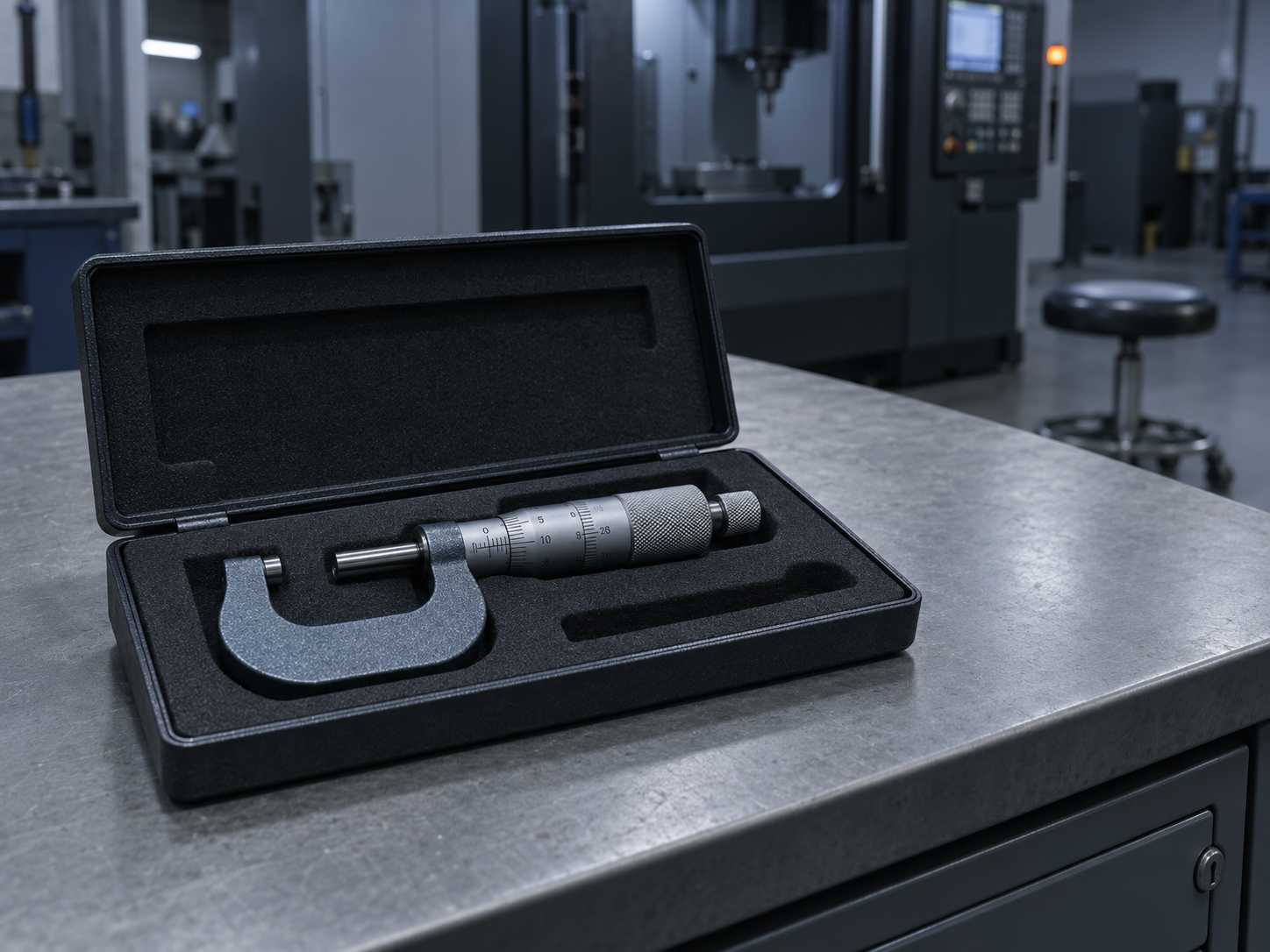
Most sites run two custody models side by side. Shared gauges live in the crib and go out on a check-out with a return date. Personal gauges, like a setter’s micrometer, a fitter’s torque screwdriver or an inspector’s bore gauge, are permanently allocated. They stay with one person indefinitely, and that person is the location.
Check-outs protect themselves: a return date passes, the item shows as late, someone chases it. A permanent allocation has no return date by design. The only event that reliably moves the instrument is the calibration recall. On a 12-month interval, that can come up to a year after the holder has gone.
Generic offboarding does not cover this. Standard leaver checklists list IT hardware, access cards and keys, and even for those, loss is common. One vendor survey cited in offboarding guidance reports that half of companies lost at least 5% of issued assets during offboarding. We have not verified that figure independently, but the pattern will be familiar. Calibrated gauges are usually not on the list at all, because HR does not know they exist.
What the standards actually expect
This is not a nice-to-have. The requirements are specific about identification, location and the consequences of an unknown history.
ISO 9001:2015, clause 7.1.5.2 requires measuring equipment to be calibrated at specified intervals, identified so its status can be determined, and safeguarded from adjustment, damage or deterioration that would invalidate the calibration. It also requires you to decide whether earlier measurement results are still valid when equipment is found unfit for its intended purpose. You can only make that decision if you know which results the instrument produced, and who produced them.
AS9100D, clause 7.1.5.2 goes further. It requires a register of monitoring and measuring equipment that includes its location. An allocation to someone who no longer works at the site is not a location, and an auditor sampling the register will read it that way.
IATF 16949, clause 7.1.5.2.1 requires calibration and verification records for all gauges, including employee-owned equipment, and a documented response when equipment is found out of tolerance. That includes a risk assessment of product already shipped.
Put those together and Daniel’s micrometer is a problem in waiting. If it comes back in November with an as-found reading outside tolerance, Marta has to decide which measurements it affected. Right now, the honest answer covers four and a half months, an unknown user and an unknown set of parts.
A worked example: the same micrometer, two histories
History A: no leaver step. The micrometer sits in Daniel’s old drawer until early July. A new setter, Tom, finds it and starts using it because it is there. Nothing is recorded, because the register still says Daniel. In November the lab recalls it, finds it, and the as-found reading on the 25 mm check is 4 µm outside the permissible error. The impact assessment now has to cover every characteristic measured with a 0–25 mm micrometer in that cell since 30 June. That is effectively the whole cell, because nothing links this instrument to Tom, to a job or to a date.
History B: allocation closed on the leaving date. On 30 June the allocation to Daniel is ended and the micrometer is returned to the crib. It gets an as-found check before it is reissued. On 3 July it is permanently allocated to Tom, with the date and the person recorded. In November the same 4 µm out-of-tolerance result appears. Now the impact assessment has edges: one holder, a known start date, and the as-found check on return giving a clean baseline at 30 June. The suspect window is July to November, for Tom’s jobs only.
The physical instrument, the drift and the calibration interval are the same in both cases. What separates them is the custody record, and that is what decides whether the out-of-tolerance investigation takes an afternoon or turns into a containment exercise.
The objection: "The recall will catch it anyway"
It will catch the instrument, eventually. It will not reconstruct the history. A recall works on the register: it finds the record due and asks the holder to hand the item in. When the holder is gone, the recall turns into a search. Even when the search succeeds, it tells you where the gauge is now, not who used it between the leaving date and today.
A second version of the objection is "we’ll pick it up at the year-end count." A count confirms that the item exists. It does not give you a custody trail. Neither method answers the question an out-of-tolerance investigation will ask.
The fix is cheap only if it happens on the leaving date. After that, every week adds unrecorded use you cannot recover.
A leaver checklist for calibrated equipment
Add these steps to the offboarding process, owned by quality and triggered by HR:
- List every instrument allocated to the leaver. Include check-outs and permanent allocations, and look across departments.
- Physically recover each one before or on the last day. Match serial numbers against the register.
- Run an as-found check on return for anything that will be reissued before its next calibration. This gives you a baseline dated to the handover.
- Close the allocation with a date. Then either return the item to the crib or reallocate it to a named person.
- Flag anything not recovered. Mark it missing, restrict its use, and record it as an open item until it is found.
- Review the leaver’s department’s register for other gaps. One leaver often exposes a pattern.
How PrüfDesk keeps the record true
In PrüfDesk, a permanent allocation is a record in its own right: instrument, person, start date and, when it is closed, end date. Every allocation, check-out and location change is kept in the equipment’s possession history, so the answer to "who had this gauge, and when" is a query, not an investigation.
When Marta handles a leaver, she filters the equipment catalog by that person to see every instrument allocated to them. She ends each allocation, records the return, and runs the as-found check using the same reusable procedure template the lab uses for that instrument type. That template applies across all 0–25 mm micrometers, with per-unit overrides where one needs them. The pass/fail result and any certificate are attached to the instrument’s record.
Due dates are calculated from the calibration interval, so a reallocated instrument keeps its correct due date. If the tenant is configured for hard overdue blocking, the instrument cannot be checked out or allocated once it passes that date. Nobody can quietly keep using it past due, whoever holds it. At audit time, the PDF compliance report shows the calibration history alongside the custody trail, and that is the evidence an auditor sampling one micrometer will ask for.
Start with this week’s register
Filter the register by holder and check each name against your current staff list. Most sites find at least one allocation that belongs to someone who has already left. If you want to see how possession history and allocation closure work in PrüfDesk on your own equipment, we are happy to walk you through it on a sample of your register.