Perpetual Licence vs Subscription: 3-Year Calibration Cost
A one-time seat plus 20% maintenance looks cheap on the quote. Here is the 3-year line-by-line math your controller will ask for: seats, servers, upgrades.
"We’d rather own it than rent it." If you have put calibration software in front of a plant controller, you have probably heard that sentence, and it tends to end the conversation. On paper a perpetual licence looks like the safe choice. You pay once, capitalise it and use it for ten years. A monthly plan looks like a bill that never stops.
Here is the situation many quality managers are in this week. Q4 starts tomorrow. You have 600 instruments in a spreadsheet, a surveillance audit on the calendar, and two quotes on the desk. One is a perpetual licence priced per named seat, with annual maintenance. The other is a flat monthly plan priced by instrument count, with unlimited users. The perpetual quote has the smaller headline number in year one, and finance will read it that way unless you show them the other two years.
This article works through that comparison, line by line, over three years. Use the structure with your own quotes. Our example figures are placeholders, labelled as such.
Why the licence price is the wrong number to compare
A perpetual quote comes as two lines: the licence and "annual maintenance". Maintenance pays for support, bug fixes and the right to install new versions. It is normally a percentage of the licence. Third-party reviews of one well-known legacy calibration tool describe the professional tier as roughly $2,000–3,000 one-time per seat plus about 20% a year in maintenance. Older quality-forum threads quote entry packages from around $1,350 to $1,995 for a single user, with yearly maintenance required. The per-seat structure matters more than the exact figure. Every person who needs to write to the system is another licence, and every licence carries its own maintenance line for as long as you want updates.
Two more costs stay off the vendor quote but show up on your P&L:
- Hosting. Most perpetual calibration tools run on your own server and database, so IT carries patching, backups and access control.
- Upgrades. A new major version is a project. You install it, test it and confirm the records migrated intact. In a regulated plant you document that, because the system holds the evidence ISO 9001 7.1.5.2 and IATF 16949 7.1.5.2 require for measurement traceability and calibration records.
The worked example: 600 instruments, three years
Assumptions, all placeholders for your own numbers:
- 600 instruments, growing slowly.
- The perpetual quote covers 5 named seats (one quality engineer, two lab technicians, two department managers) at €2,500 per seat, with 20% annual maintenance.
- One more seat is added in year 2, when a second shift lead needs write access.
- In-house hosting takes 3 hours of IT time a month at an internal rate of €60/hour.
- One major-version upgrade in the three years takes 16 hours of IT and quality time at the same rate, covering installation, a check of record integrity and documentation.
- The subscription alternative is PrüfDesk Professional at €129/month list, covering up to 1,000 assets with unlimited users.
| Cost line (3 years) | Perpetual + maintenance | PrüfDesk Professional |
|—|—|—|
| Licences, 5 seats | €12,500 | — |
| Maintenance at 20% (years 2–3 only / years 1–3) | €5,000 / €7,500 | — |
| Sixth seat in year 2, plus year-3 maintenance | €3,000 | €0 (unlimited users) |
| Hosting and IT upkeep (3 h/month) | €6,480 | €0 (hosted) |
| Major-version upgrade and verification | €960 | €0 (included) |
| Subscription, 36 × €129 | — | €4,644 |
| 3-year total | €27,940 – €30,440 | €4,644 |
The maintenance line has a range because vendors differ on whether year-one support is bundled into the licence. Ask. Remove the IT and upgrade lines entirely, as a sceptical controller might, and licences plus maintenance still come to €17,500–20,000 against €4,644. If your register grows past 1,000 assets and you move to Enterprise at €299/month, three years is €10,764, which is still below the licence-plus-maintenance figure alone.
The seat count is a quality problem as well as a cost problem
The perpetual quote covers five people. Your plant has forty operators who pick up gauges, check calibration status and return them. With per-seat pricing, the usual workaround is a shared login at the gauge crib, or no system access at all for operators.
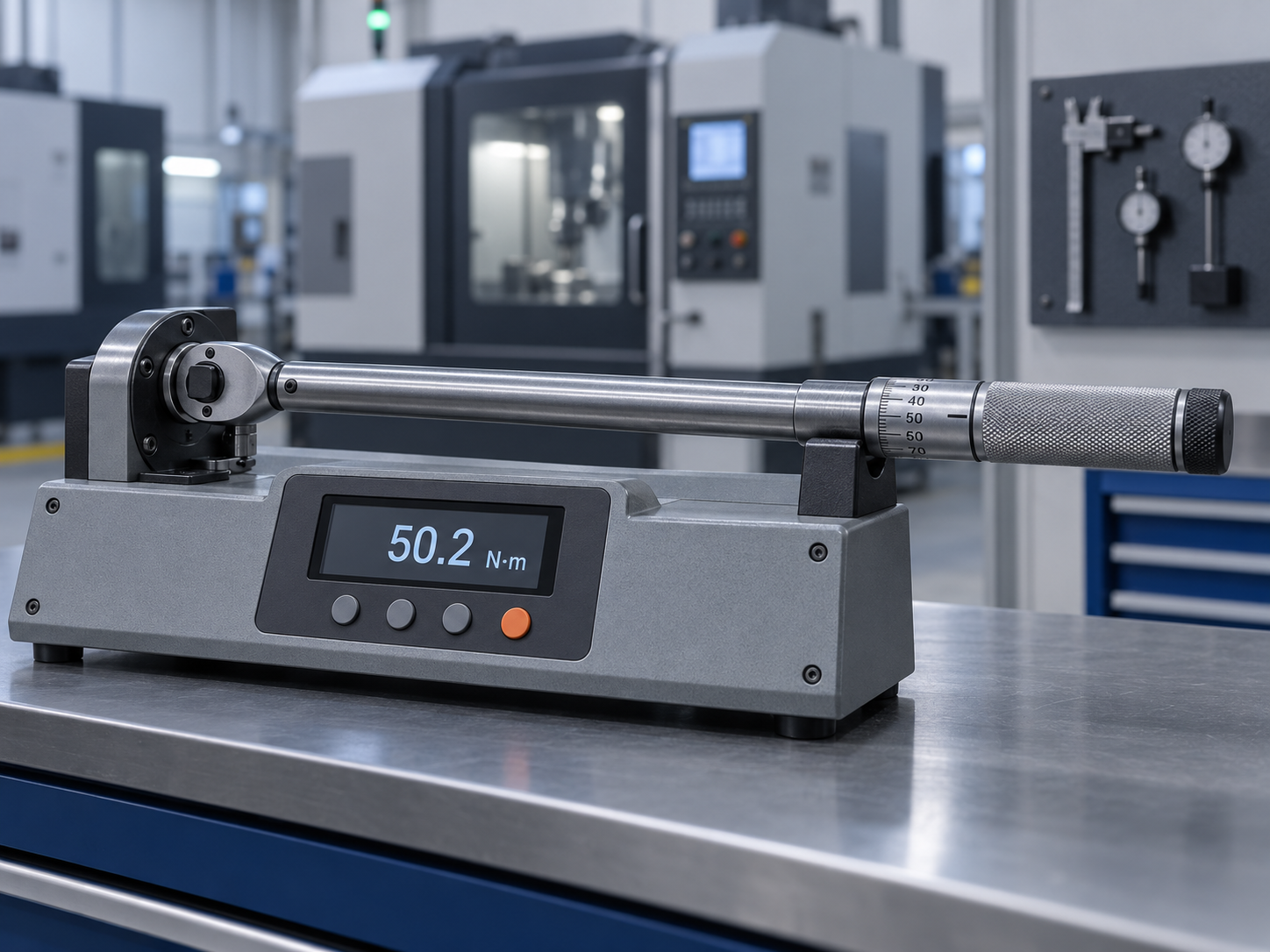
Both workarounds weaken the records you actually rely on. When a torque wrench comes back from calibration with an as-found reading out of tolerance, ISO 9001 7.1.5.2 requires you to determine whether the validity of previous measurement results has been adversely affected. IATF 16949 7.1.5.2.1 goes further and requires a record of the suspect product and any customer notification. To scope that assessment, you need to know who had the wrench, on which line, and between which dates. A shared login gives you a name for the crib, not for a person.
On a plan with unlimited users, every operator can have their own account. PrüfDesk records check-outs and permanent allocations with a full possession audit trail, so the impact assessment starts from facts. Configurable overdue blocking, either a hard block or a soft warning per tenant, stops an overdue instrument being issued in the first place. The seat decision and the traceability decision turn out to be the same decision.
When the perpetual licence does win
In fairness, there are cases where it wins. Take one user with a small register, on a tool published at around $768 one-time per seat, who deliberately skips maintenance. Over three years that is cheaper than PrüfDesk Starter at €49/month (€1,764). If that describes your lab, one person managing a few dozen gauges who is content on a frozen version, buy the licence.
Before you do, be clear about what "own" means. You own the right to run a specific version. You do not own future compatibility with your operating system, your database or your auditor’s expectations. Stop paying maintenance and you are on unsupported software holding your 7.1.5 evidence. Many vendors also charge to reinstate lapsed maintenance, so ask for that term in writing.
Capex or opex: ask your controller before you ask the committee
A perpetual licence is typically capitalised as an intangible asset, which often sends it to the capex committee and into next year’s depreciation schedule. Under IFRS, a SaaS subscription is usually treated as a service contract and expensed as received. The IFRIC agenda decision of March 2021 addressed configuration and customisation costs in cloud arrangements, which are generally expensed too. US GAAP treats implementation costs differently. This is not accounting advice. It is the question to put to your controller this week, because the answer may decide which budget line and which approval path you need.
Checklist: questions to send with any perpetual quote
- Is maintenance a percentage of list price or of the discounted price, and does it escalate each year?
- Is year-one maintenance included in the licence price?
- What does reinstatement cost if maintenance lapses?
- Are major-version upgrades covered by maintenance, or charged separately?
- Which server, database and operating-system licences does the tool require, and who maintains them?
- What does one additional seat cost, including its maintenance?
- Can operators without a paid seat check instruments out under their own identity?
Put the answers into the table above, add your own IT rate, and you have a single page finance can check.
Where PrüfDesk fits
PrüfDesk is priced by instrument volume, not by head: Starter €49/month (250 assets), Professional €129/month (1,000 assets), Enterprise €299/month (unlimited assets), with unlimited users on every plan. It registers each instrument, calculates calibration due dates automatically, records pass/fail results with certificates attached, and applies reusable procedure templates that you can override per unit. It produces audit-ready PDF compliance reports for ISO 9001, IATF 16949, AS9100 and ISO/IEC 17025 audits. There is no server to patch and no upgrade project to validate on your side.
If you are writing a 2027 budget line, or committing what is left of 2026, talk to us about an annual plan. Ask us about annual billing and we’ll give you the exact terms, so the figure in your spreadsheet matches the one on the invoice.