CET Support When Overdue Blocking Stops the Line
A hard-blocked gauge halts the line at 09:00 CET. If your vendor's desk opens at 09:00 US time, that's a lost shift. The case for EU-hours support.
CET Support When Overdue Blocking Stops the Line
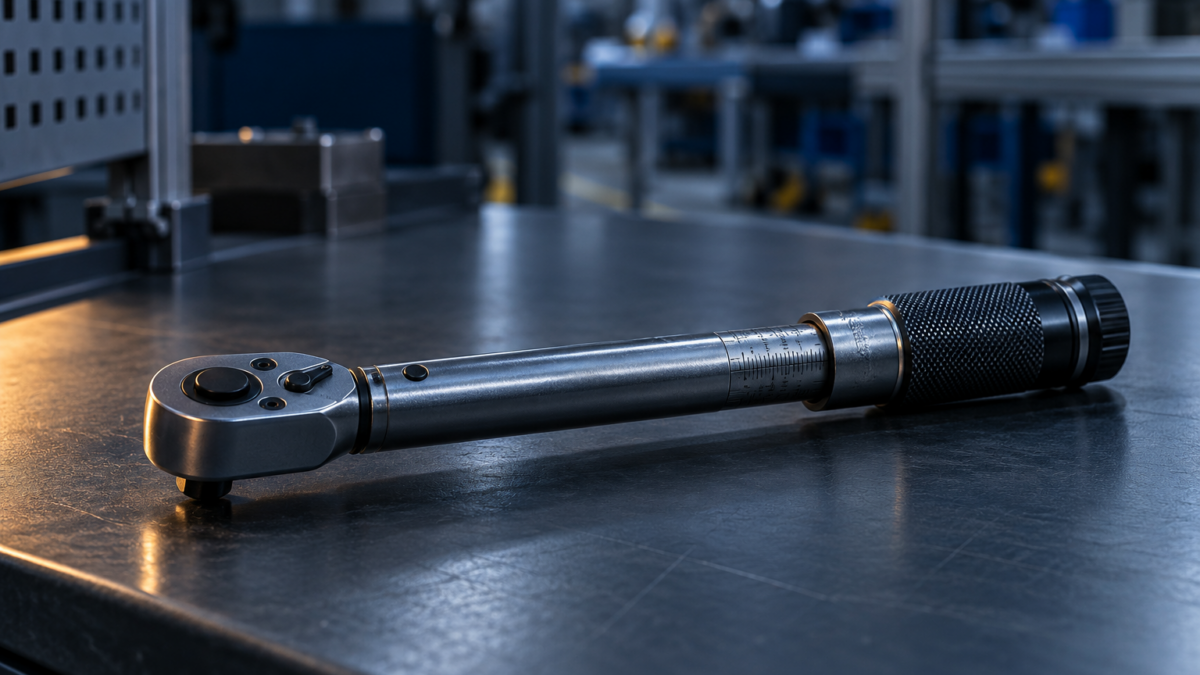
It is 09:00 on a Tuesday. First shift is staffed, the IATF 16949 line is meant to be running, and an operator scans a torque wrench at the check-out station. The system refuses it: the instrument is past its calibration due date, and your tenant is configured to hard-block — no calibrated tool, no production, exactly as your quality manual promises the auditor. Except this block looks wrong. The certificate came back last Friday. The wrench should be current. You raise a ticket with your calibration-software vendor, and the auto-reply tells you the truth you already suspected: their support desk opens at 09:00 Eastern. That is 15:00 your time. Six hours from now.
That gap — between the moment your line stops and the moment a human on the other side of an ocean picks up your ticket — is the subject of this article. It is not an abstract preference for "local" anything. It is a production risk you can put a number on.
The block is not the problem — and you should not weaken it
Let us be clear about one thing first, because it is where the easy answer leads and the easy answer is wrong. Hard-block overdue control is a feature, not a bug. IATF 16949 clause 7.1.5.1 and AS9100 both require assurance that measuring equipment is fit for use, and the most defensible way to prove that is to make it physically impossible to check out an instrument whose calibration due date has passed. A soft warning that a busy operator can click past is exactly the finding an auditor is trained to look for. So when the block fires, the control is doing its job.
The trouble is that a hard block turns your calibration system into a gate on production. Most of the time that gate opens and closes silently and correctly. But the day it holds an instrument it should not — or the day you need a controlled, documented release to keep a line moving while you resolve a genuine issue — the software has become a single point of failure, and your ability to clear it depends entirely on who can reach into the system and how fast.
When you actually need a human, mid-shift
Overdue blocking generates support demand in a handful of specific, time-critical situations, and none of them wait politely for the afternoon:
- The false-overdue loop. The certificate arrived, the record was updated, but the due date did not recalculate — so a current instrument is blocked. The part is fine; the field is stale.
- A controlled emergency release. Production must continue under a documented concession while the real calibration is scheduled. You need the right role, permission, or configuration to record that release properly — not to bypass the control, but to evidence it.
- An onboarding gap. A replacement gauge was rushed onto the floor and its record is incomplete, so it blocks on first use.
- An import or serial-number mismatch after a data load, where two similar instruments were crossed and the wrong one is flagged.
Every one of these is fixable in minutes by someone who knows the system. Every one of them costs a full shift if the only people who know the system are asleep.

The arithmetic of a six-hour gap
Put the clock on it. A plant in Stuttgart, Turin or Bilbao starts first shift around 06:00–07:00 CET and is in full swing by 09:00. A support desk on the US East Coast opens at 09:00 ET — 15:00 CET in winter. On the US West Coast it is 18:00 CET. So a block that fires at the start of your day meets its first responder six to nine hours later, near the end of your day. If that instrument gates a single cell, you have lost most of a shift to a data field, not to a metrology failure. A line running even a modest contribution margin per hour turns that into a five-figure loss before anyone overseas has read your ticket — and if it recurs, it becomes a reason your operators quietly learn to distrust the very control your audit depends on.
The objection: "a global vendor will offer 24/7 follow-the-sun"
This is the fair counter-argument, and it deserves a straight answer. Yes, a large global vendor may staff round-the-clock tier-1 support. But two things rarely survive contact with a stopped line. First, follow-the-sun tier-1 is usually a triage layer; the person who can actually touch tenant configuration, a permissions model, or a data-residency-bound record sits in one office, in one time zone, and your escalation still has to cross it. Second, that overnight agent does not know that DAkkS accredited your reference lab, does not work in your language, and has never sat through a DACH surveillance audit. An EU-native vendor’s entire team — support, engineering, the person who can change a tenant setting — overlaps your working day and your regulatory context by default. You are not buying a promise of coverage; you are buying an office that is simply awake when you are.
Support that can act while the data stays in the EU
There is a quieter reason timezone and residency belong in the same conversation. To resolve a block quickly, someone often has to look at — or adjust — a live record. If your calibration data is required to stay resident in the EU for GDPR and procurement reasons, you want the people reaching into that record to be operating under the same regime, in the same region, not exporting a support session across a border to debug it. EU-hours support and EU data residency are the same design decision seen from two sides: the team that helps you is where your data is.
The takeaway
Keep the hard block — it is the control that keeps an overdue instrument off the part and keeps your audit clean. But recognise that the block only pays off if you can clear a false block, or record a controlled release, inside the shift it happens in. That is a support-hours question, and support hours are a timezone question. If the desk that can act on your system opens as your working day ends, the control you adopted to pass audits becomes the thing that stops your line. PrüfDesk is built and supported in the EU, on CET, with your records resident in Europe — so when a block fires at 09:00, help is already at its desk, not eleven hours from its alarm clock. That is the unglamorous, adopt-now reason to choose an EU-native calibration system rather than wait for a global vendor to open a European office.