Audit-Ready Calibration Cutover in Weeks, Not Months
Your IATF 16949 surveillance audit is closer than a 6–12 month rollout. How an EU-native calibration cutover fits inside one calibration cycle.
Audit-Ready Calibration Cutover in Weeks, Not Months
Your surveillance audit is on the calendar for the spring. Your calibration schedule still lives in a shared spreadsheet that three people edit and nobody trusts. And every vendor you talk to describes a "proper" system as a six-to-twelve-month implementation project with a six-figure price tag, a data-model workshop, and an integration backlog. So you do the quiet arithmetic every quality manager does: the rollout finishes after the audit, not before it. You decide to survive one more cycle on the spreadsheet, and the problem rolls forward another year.
That timeline is not a law of physics. It is an artefact of how large, general-purpose enterprise platforms are sold and configured. Calibration management does not require it — and in the EU right now, waiting for a global vendor’s implementation team to reach your plant is a choice, not a constraint.
Why the "months" number exists — and why it isn’t yours
The 6–12 month figure is real, but it belongs to a different kind of project. It covers custom data modelling, bespoke workflow engineering, ERP and MES integrations, on-premise infrastructure procurement, security review of that infrastructure, and a validation phase for all of it. Those months are spent making a horizontal platform behave like a calibration system.
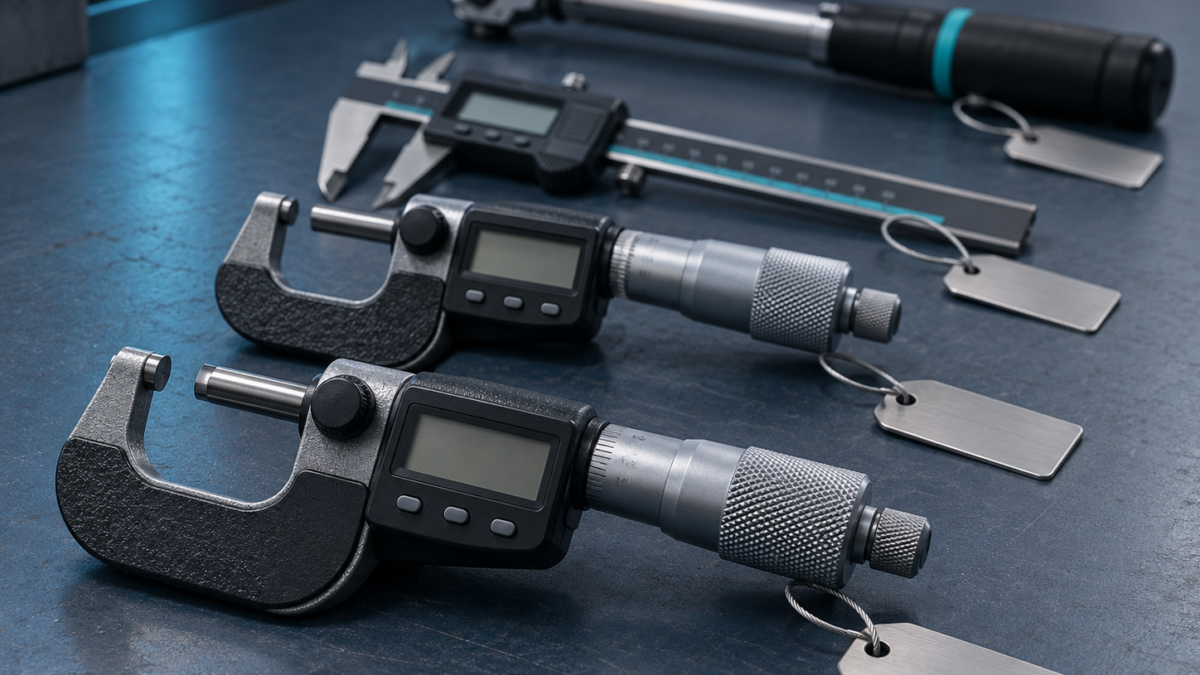
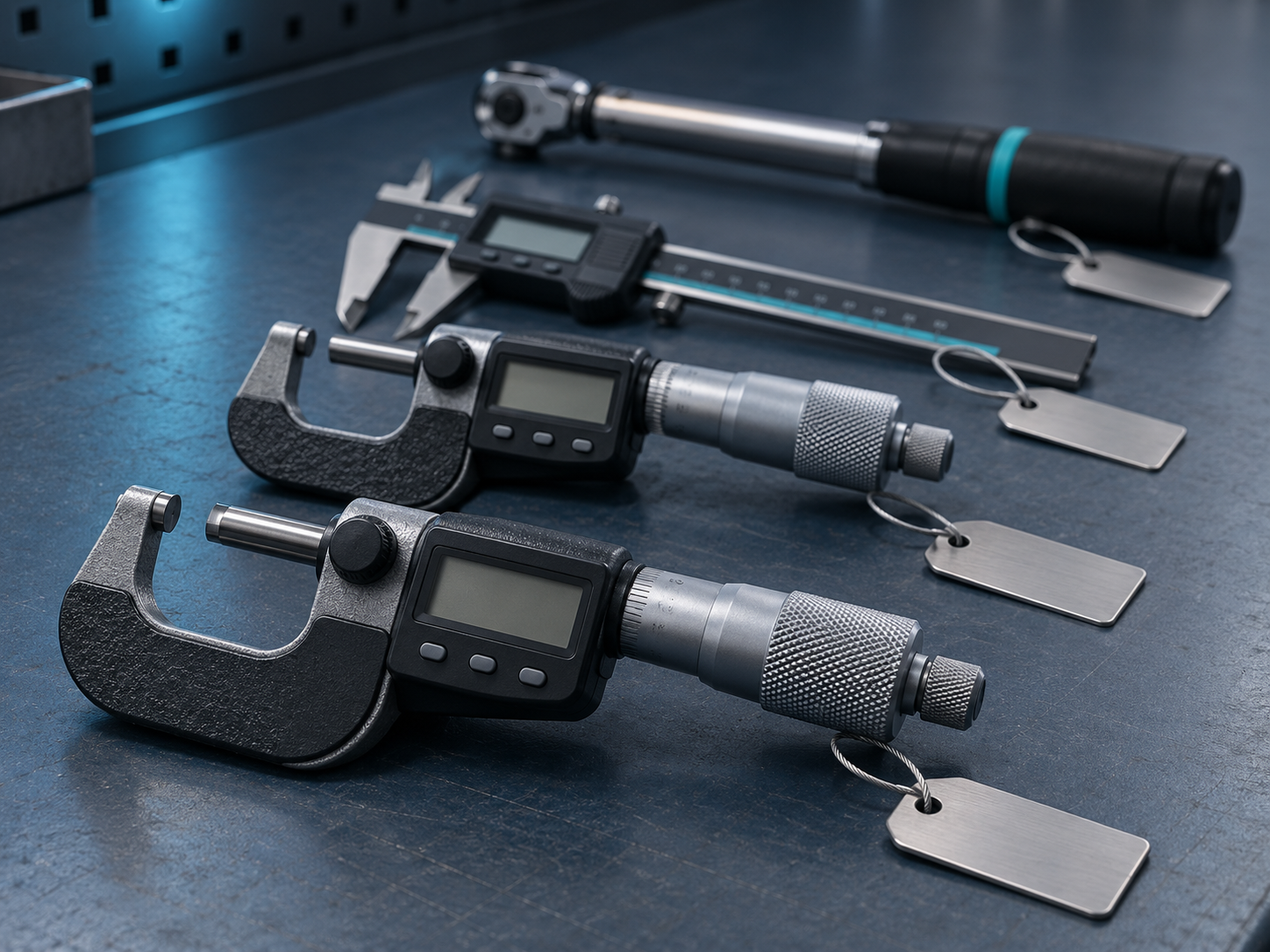
Managing precision measuring equipment is a well-bounded problem. You have a finite catalog of instruments — micrometers, calipers, bore gauges, torque wrenches, height gauges. Each has an identity, a location, an owner, a calibration interval, a last-calibrated date, and a certificate. From those facts a due-date engine produces the one number your audit actually turns on: the calibration due date, and whether anything is overdue. You do not need a twelve-month project to represent that. You need a clean master list, a due-date rule per instrument type, and an immutable place to log the next as-found/as-left result. The scope that makes enterprise rollouts long is scope a calibration system does not carry.
The calibration cycle is your project clock
There is a natural deadline hiding in your own data. Most instruments sit on 6- or 12-month calibration intervals, which means your program already moves in cycles. A cutover that completes inside one of those cycles never loses the thread of the schedule: every instrument that comes due during the transition is recalibrated in the new system, so its first record there is a real event, not a back-filled guess.
Count backwards from your next IATF 16949 or AS9100 surveillance audit. If it is more than roughly eight weeks out, a cutover fits inside the window with room for a parallel run. That is the whole thesis: you are not racing a twelve-month project against a four-month audit. You are fitting a weeks-long migration into a gap you already have.
A worked cutover: 800 instruments, one DACH plant, audit in four months
Take a concrete case a senior quality engineer will recognise. A single site, around 800 registered instruments across three departments, an IATF 16949 surveillance audit roughly sixteen weeks away, and a calibration schedule currently held in Excel.
- Weeks 1–2 — Build the catalog. Export the spreadsheet, clean the obvious duplicates, and import the master list: instrument identity, type, location, owner, interval, last-calibrated date, and current certificate. The import is the project’s heavy lifting, and it is measured in days, because the data already exists.
- Weeks 3–4 — Turn on the due-date engine and run in parallel. The system now calculates every due date and flags overdue items — often surfacing instruments the spreadsheet had quietly let slip. Keep the spreadsheet alive alongside for one reconciliation pass so you trust the numbers before you retire it.
- Weeks 5–8 — Log live and template the procedures. Every instrument that comes due is recalibrated in the system, its as-found/as-left and pass/fail recorded against a reusable procedure template for that instrument type. Custody and check-out tracking replaces the sign-out clipboard.
- Weeks 9–16 — Backfill and rehearse the audit. With the live program running, backfill historical certificates as time allows and generate a draft compliance report. You walk into the surveillance audit able to produce a complete, current, unaltered record on demand.
Nothing in that plan needs a twelve-month runway. The single source of truth is standing well before the auditor arrives.
What "EU-native" removes from the timeline
Half of the months in a conventional rollout evaporate when the system is already built for European regulated manufacturing. Data residency is not a procurement project or a fresh data-processing agreement to negotiate for a US region — it is the default. The audit expectations the tool models are the ones your notified body actually applies. The interface and reports already speak German or Spanish, so there is no gap between what the auditor asks and what the tool says. And, most simply: you are not waiting for a global vendor to extend its roadmap to your market before you can start. The teams that move now close the gap before that vendor ever arrives.
The objection: "A fast cutover is a shallow one — we’ll fail the audit"
This is the fair worry, and the answer is to separate audit-readiness from completeness. The audit-ready minimum is narrow and achievable in weeks: a correct instrument catalog, correct due dates, current calibration status, and the last certificate retrievable per instrument. That is what a surveillance audit samples. Deep history, every legacy certificate, and full procedure libraries are valuable, but they are a backfill that continues safely after go-live — they are not a precondition for passing. Rushing the master list would be reckless; sequencing the depth behind a solid live core is simply good project design.
The mirror-image risk is the one that actually bites: staying on the spreadsheet through another audit. An editable file with no tamper-evidence, silent gaps, and no reliable overdue flag is the finding waiting to happen. A parallel-run cutover is the lower-risk path, not the higher one.

One takeaway
Open your audit calendar and count the weeks to your next surveillance visit. If it is more than eight, you have time to be audit-ready in the new system before the auditor sits down — you do not have to wait a year or wait for a vendor to reach your market.
PrüfDesk is built EU-native for exactly this cutover: import your instrument catalog, let the due-date engine take over the schedule, and log as-found/as-left against reusable procedure templates with a full, immutable custody trail — in weeks, inside one calibration cycle. When you are ready to count backwards from your audit date, we can map the plan with you.