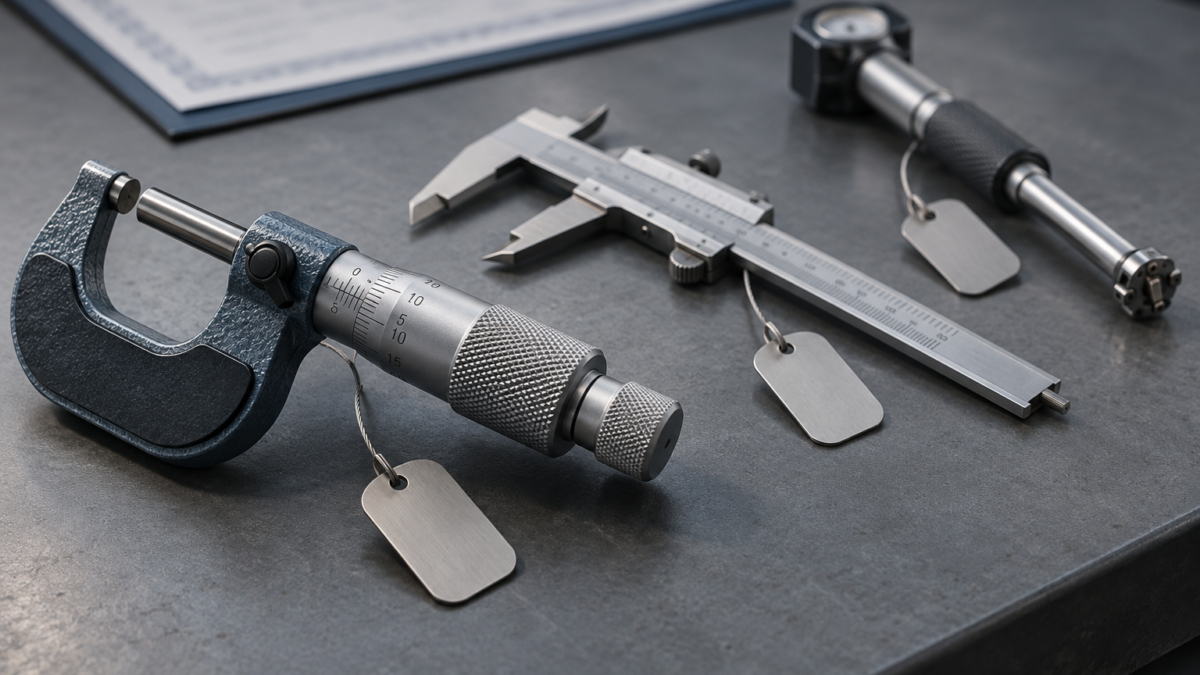
90 Days to Your Q4 Surveillance Audit: Calibration Prep
A 90-day, auditor-grade calibration checklist for Q4 surveillance: overdue status, traceability, uncertainty, as-found/as-left, retention — no scramble.
90 Days to Your Q4 Surveillance Audit: The Calibration-Record Scramble, Eliminated
The surveillance date is on the calendar. You have roughly 90 days, and you already know how the calibration portion tends to go: the auditor picks an instrument — not one you prepared, a random one off the shop floor — and asks to see its full history. Its due date. Its last certificate. Its traceability. What happened the last time it was found out of tolerance. And you start opening folders. One certificate is in a shared drive nobody has cleaned since 2023, another is a scanned PDF in an email thread, and the instrument itself was checked out to a line you have to go ask three people about. Thirty minutes later you are still hunting, and the auditor is writing.
That scramble is not a sign your program is bad. It is a sign your evidence is scattered. This article turns the next 90 days into an ordered checklist, framed the way a European auditor actually reads a calibration program — and shows you where a system of record collapses the scramble into a single screen.
Why this Q4 is not a normal Q4
Surveillance audits are routine — under IATF 16949 you get two surveillance audits and one recertification across a three-year cycle, at roughly 12-month intervals, so autumn is peak prep for a large share of certified plants. What makes this cycle different is the standard underneath it. ISO 9001:2026 publishes on 16 September 2026, opening a three-year transition to September 2029. Clause 7.1.5 on monitoring and measuring resources is not the headline change, but the revision sharpens change-management and the risk-versus-opportunity split — and that reframes how convincingly you must evidence that your measurement resources stay fit for purpose, not just assert it. An auditor arriving in Q4 has the new emphasis fresh in mind even while auditing you against the outgoing text. Prepare for the scrutiny, not only the clause number.
The 90-day checklist, in the order an auditor probes it
Work these five in sequence. Each one is a question the auditor will ask; each answer is a record you either have instantly or go hunting for.
1. Overdue status — the first thing they check (Day 1–15). Pull every instrument in scope and confirm nothing is past its calibration due date. An overdue gauge still in service is the fastest finding an auditor can write. The deeper question is control: can you show that an overdue instrument is prevented from being used, or only flagged? Configurable overdue blocking — a hard block for critical gauges, a soft warning for the rest — is the difference between a policy on paper and a control that demonstrably works.
2. Traceability chain — unbroken to a national standard (Day 15–35). For each instrument, the certificate must demonstrate an unbroken chain to national or international measurement standards. Certificates that fail to show that chain are among the most common findings auditors record. This is exactly where the shared-drive model rots: the reference-standard certificate expired, or the accredited-lab document was never filed against the instrument it calibrated. Verify the chain now, per instrument, while there is time to re-source a missing document.
3. Measurement uncertainty and decision rule (Day 25–45). Two omissions get circled more than almost anything else: a certificate with no measurement-uncertainty statement, and a pass/fail with no stated decision rule. A DACH audience calibrating to DAkkS and ISO/IEC 17025 expectations reads at exactly this level — a bare "PASS" with no uncertainty and no guard-band logic will not survive. Check that every certificate in scope carries both.
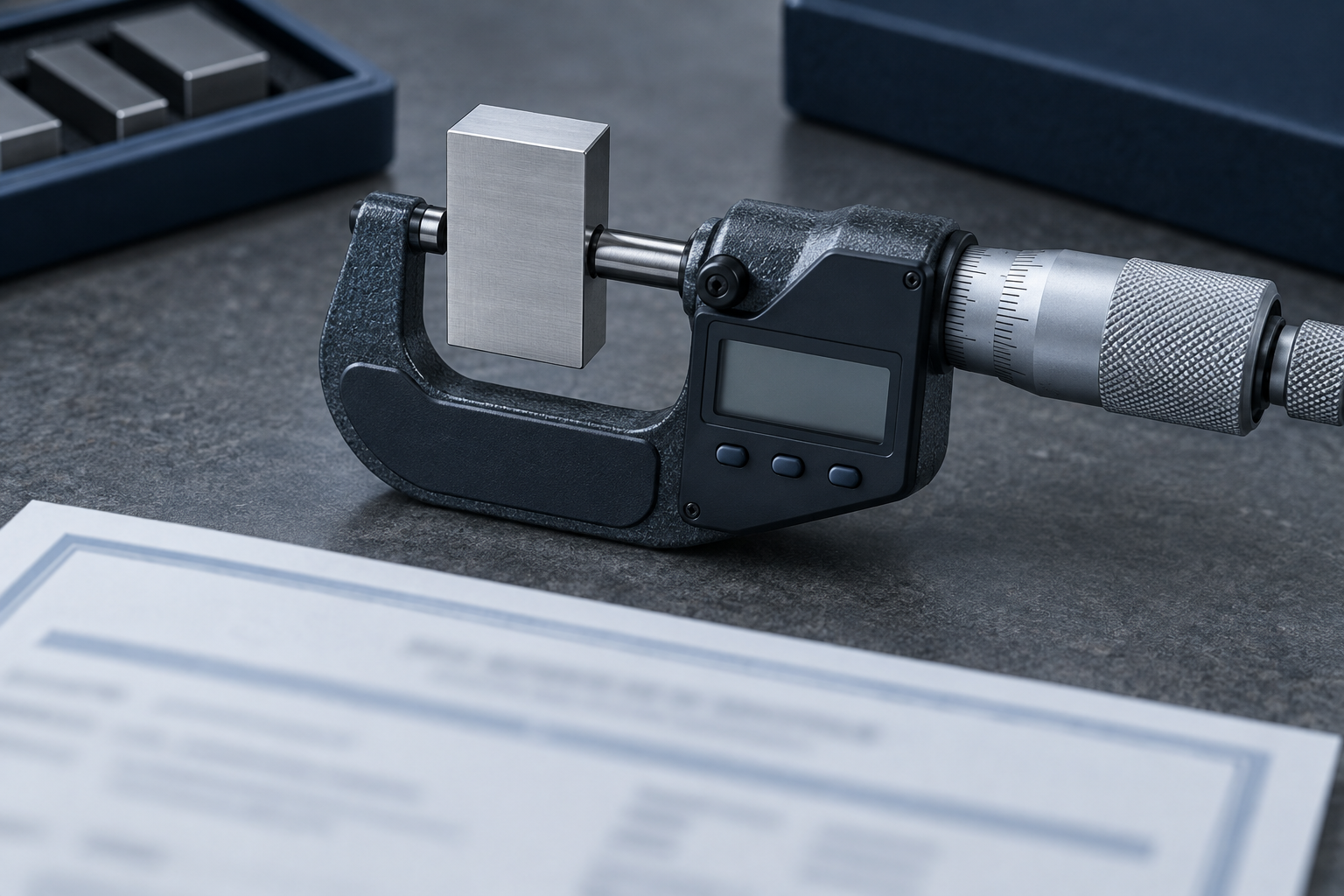
4. As-found / as-left records (Day 35–55). For calibrated instruments, the auditor wants both the as-found condition (what it read when it arrived) and the as-left condition (what it read after adjustment). As-found data is what lets you answer the follow-up question — "was anything measured with this while it was drifting?" — without guessing. If your records only capture "calibrated, passed," you have thrown away the evidence that makes an out-of-tolerance recall bounded instead of catastrophic.
5. Retention and retrieval (Day 55–90). Records must be retained for the required period and retrievable on demand. Retention is easy; retrieval under pressure is where programs fail. This last stretch is a dress rehearsal: pick ten instruments at random and time yourself pulling their complete history. If it takes more than a minute each, the audit-day scramble is already scheduled.
The worked example: instrument #247, thirty seconds
Here is the payoff the checklist is really building toward. The auditor points and says: "Show me the full history of instrument #247." In a spreadsheet-and-folders world that is a five-folder expedition. In a system of record it is one action: open #247 and you see its calibration due date, its status against overdue rules, every as-found and as-left value at every event, the certificate with its uncertainty statement and decision rule attached, and the full possession trail — who checked it out, which line it was allocated to, its location history across sites. The chain to the reference standard is linked, not filed elsewhere. Thirty seconds, one screen, and the auditor moves on. The instrument you did not prepare answers exactly as well as the one you did — because nobody prepared any of them by hand; the record simply exists.
The objection: "we already passed last year on spreadsheets"
Fair — plenty of teams do. But passing on spreadsheets is survivorship, not control. You passed because the auditor’s random pick happened to land on an instrument whose folder was tidy, and because you spent the two weeks before the audit in a manual reconciliation sprint that produces no lasting evidence and has to be repeated every cycle. The market is moving for a reason: calibration-management software grew from roughly US$353M in 2025 toward a projected US$557M by 2034 as mid-market teams leave spreadsheets behind — not because spreadsheets never pass, but because the cost of proving control by hand, every year, under a tightening standard, stops being worth it. The 90-day checklist above is the same work either way. The only question is whether you do it once, by building a record that stays true, or every autumn, by hand, hoping the random pick is kind.
One concrete takeaway: in the next two weeks, run the Day 55–90 drill early — pick ten instruments at random and time the retrieval of each one’s full history. That number, in seconds, is your real audit readiness. Everything else on the checklist is how you shrink it.
PrüfDesk keeps that record without anyone maintaining it — calibration due dates auto-calculated, configurable overdue blocking, as-found/as-left logging, certificates with traceability attached, and a full possession audit trail — all hosted in the EU. If you want instrument #247 to answer in thirty seconds this Q4, that is the demo to ask for.